Breweries
A production brewery, off the spreadsheet.
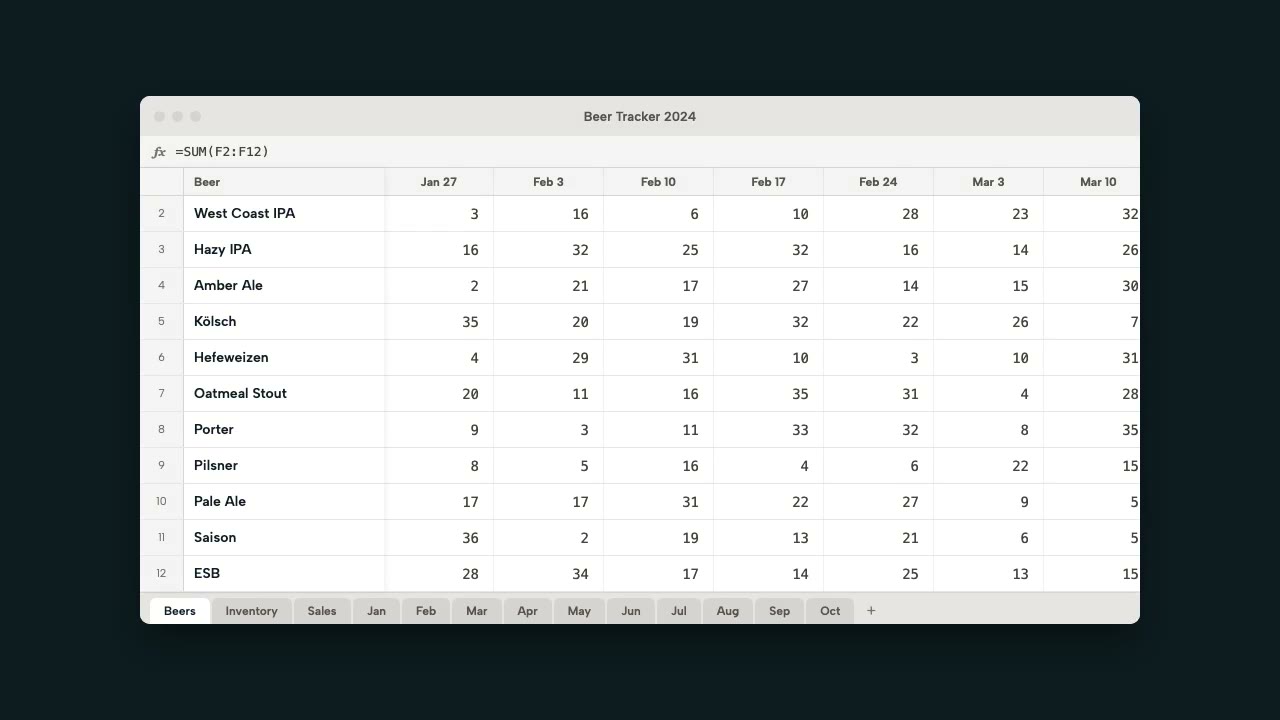
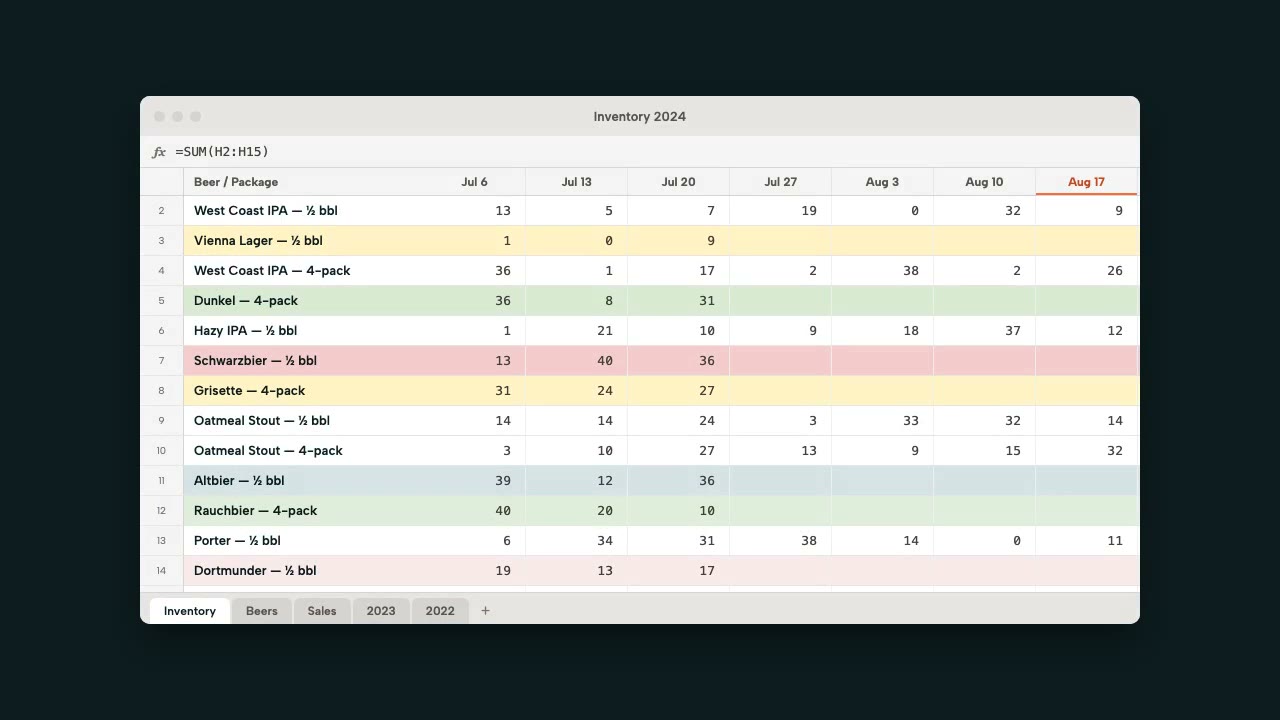
Inventory for three packages lived in one year-wide sheet, and every week somebody hand-typed sales figures to build a report. We started with the smallest thing that would help — making a count easy to record from a phone. Everything below grew out of that.
 0:40
0:40
Inventory night
The clipboard walk through the cooler becomes counts entered on a phone, as they happen.
 0:51
0:51
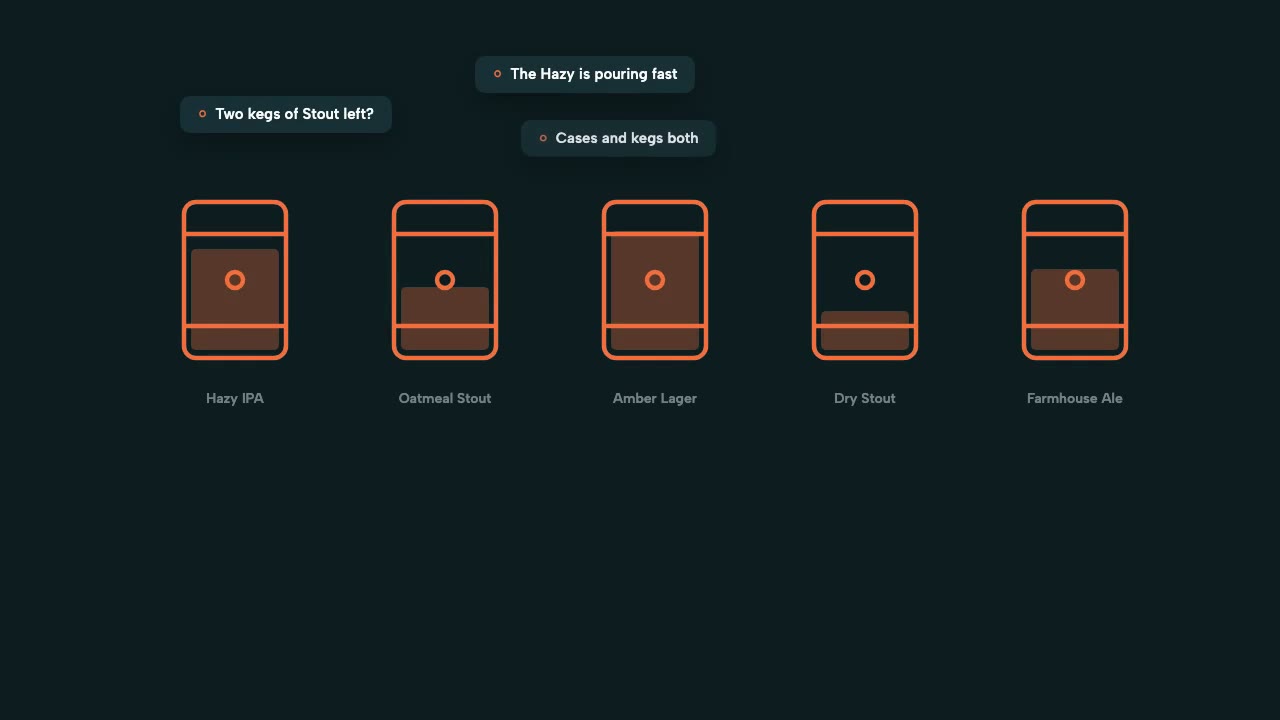
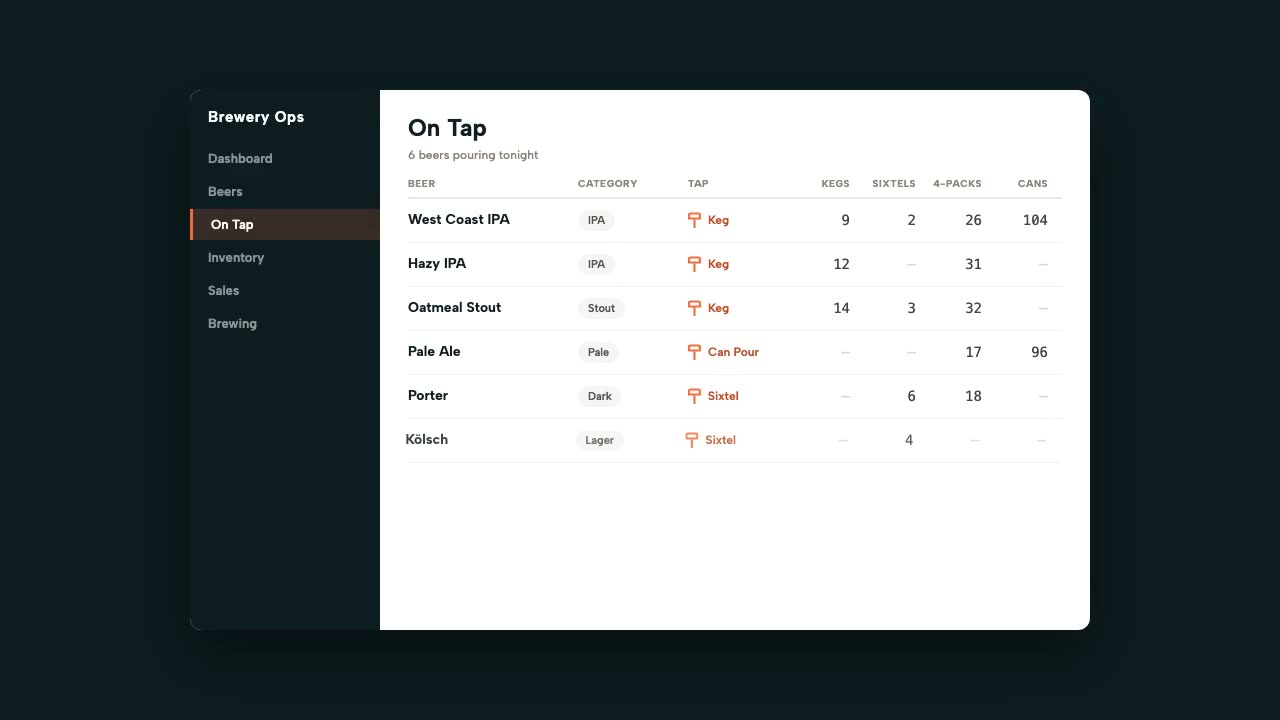
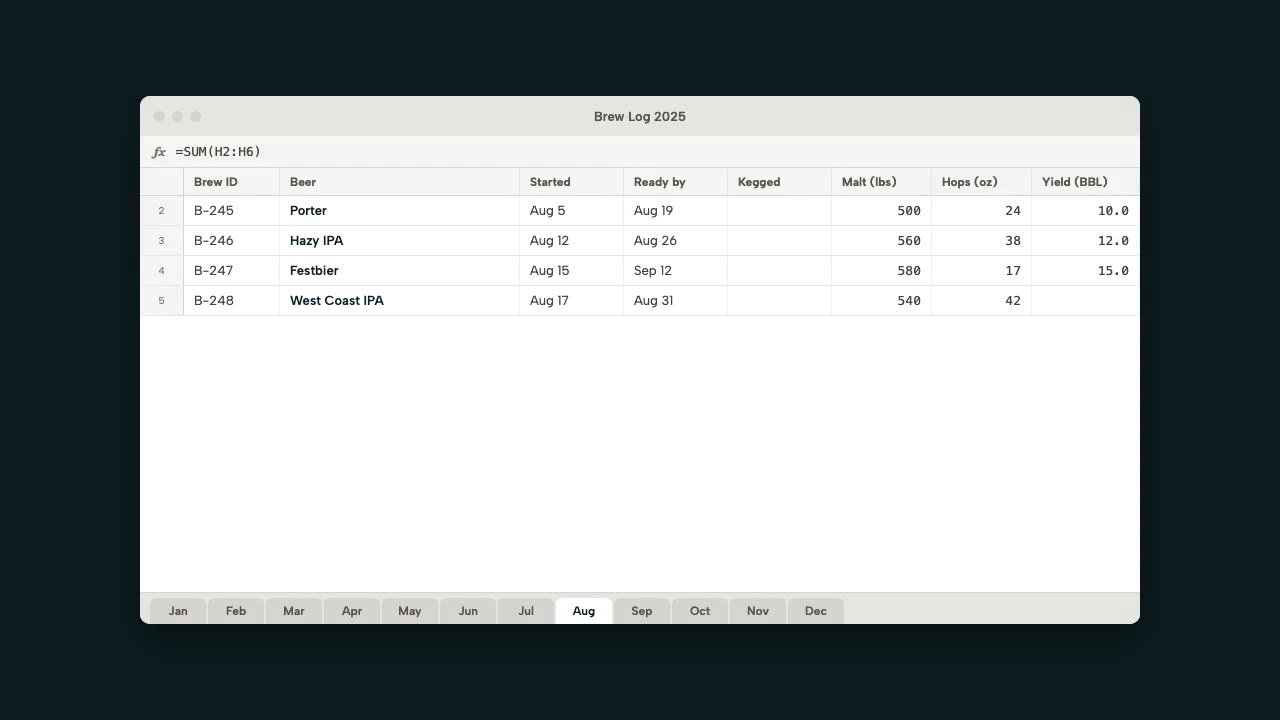
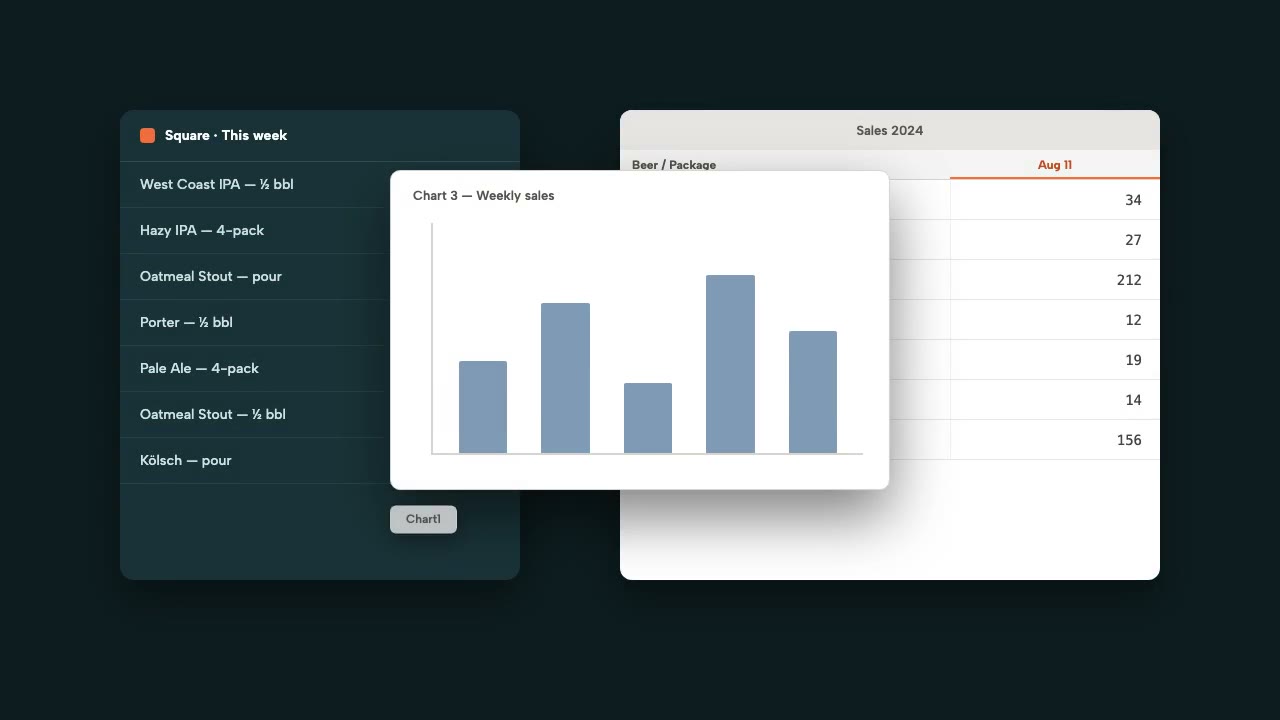
The whole cooler at a glance
Every package charted on one page, plus a live view of what is pouring right now.
 0:47
0:47
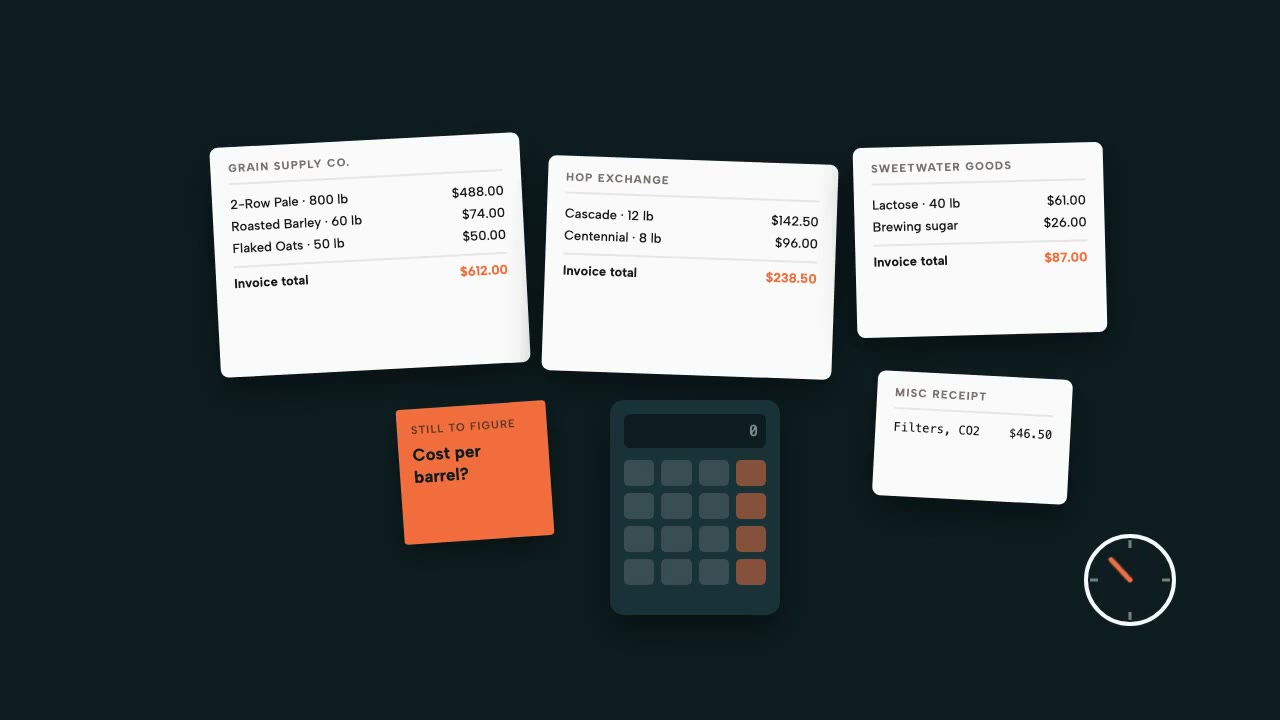
What a batch costs
Ingredient invoices roll up into a cost per barrel without anyone doing the math.
 0:45
0:45
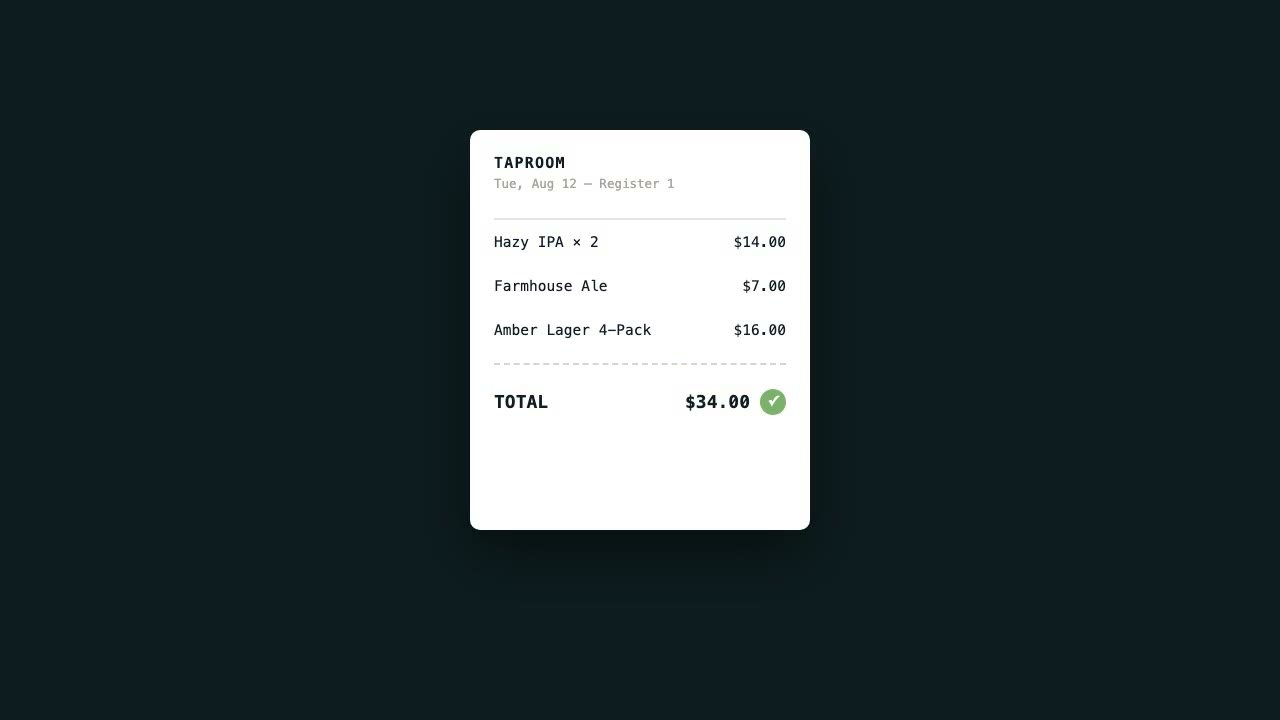
Numbers by morning
Sales arrive from the register overnight, so the reports are ready before the first pour.
 0:52
0:52
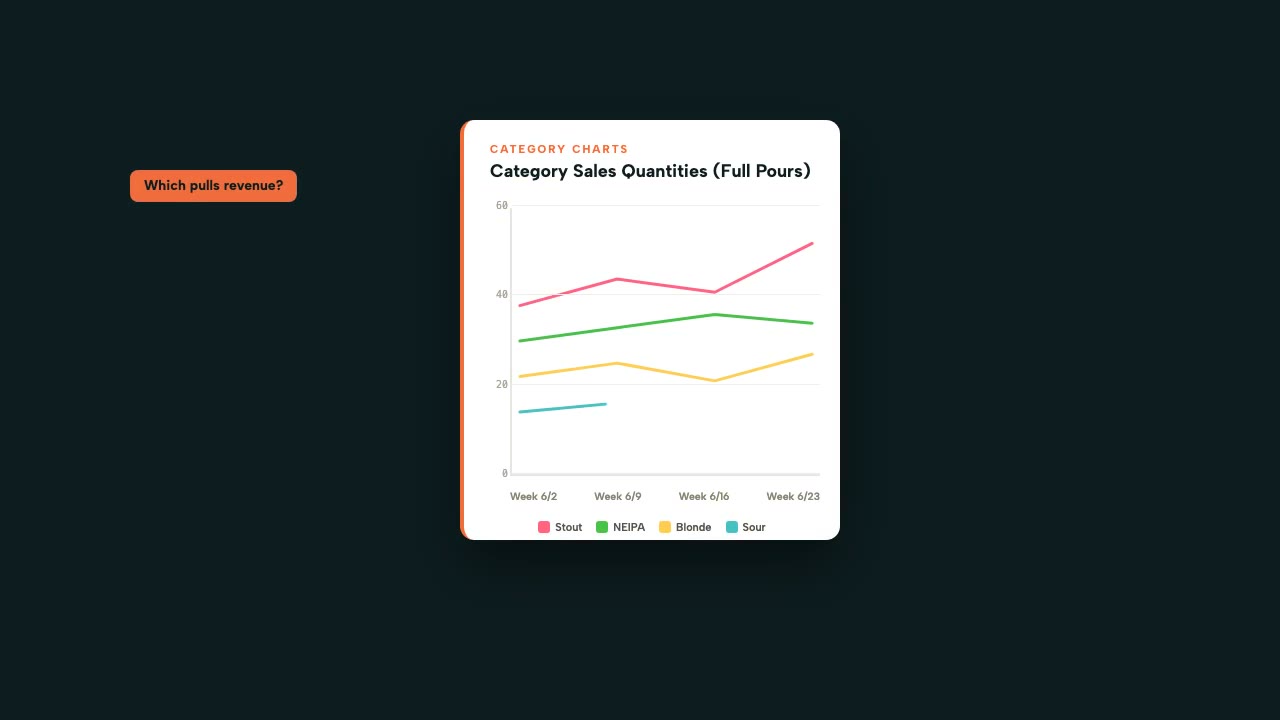
Where the discounts went
Comps and staff pours pulled out of the till data and given a number of their own.
Heavy equipment
A hundred-person repair shop, on one set of books.
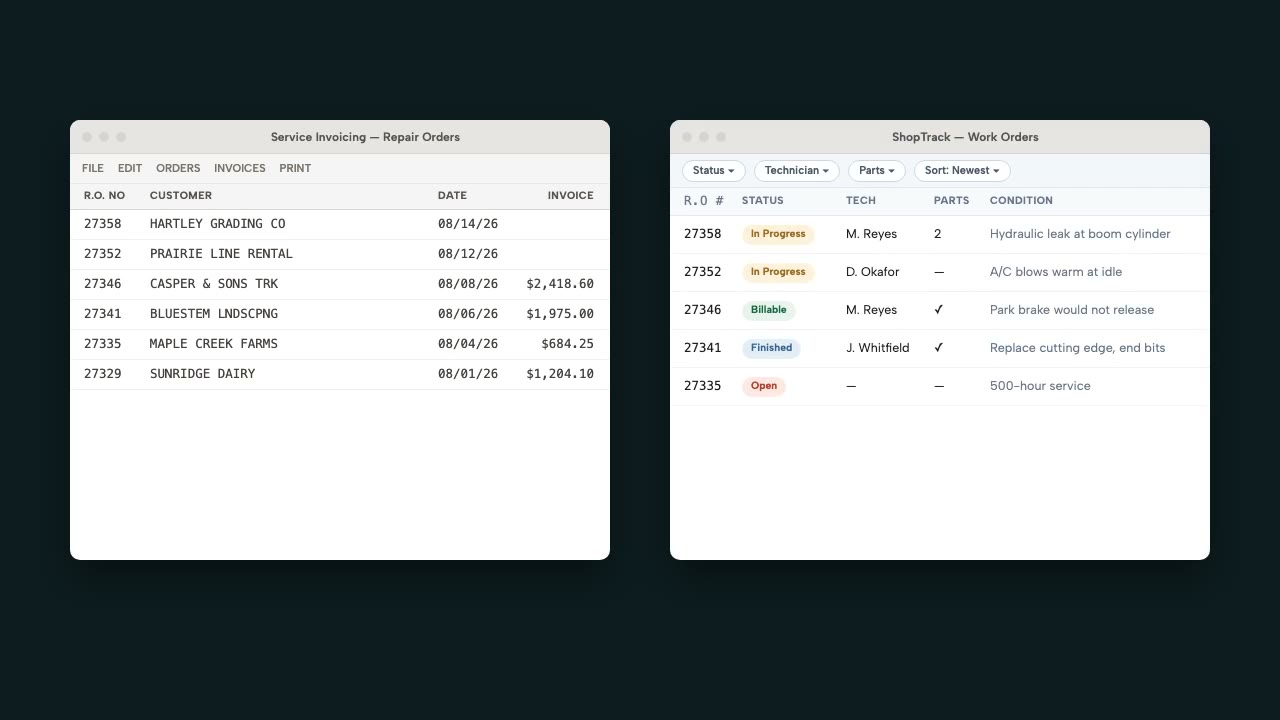
Repair orders were being kept in sync by hand across two services, because neither one had the fields the shop actually needed. We pulled the orders into one place and added those fields. That single step led to the rest.
Contractors
A contractor, and the piece their tool never had.
They were already scheduling on a tool that did nearly everything well. The one thing it never did was hand work to the subcontractors who take on a good share of it, so that part moved by hand. We left the tool alone and built the missing piece.
 1:32
1:32
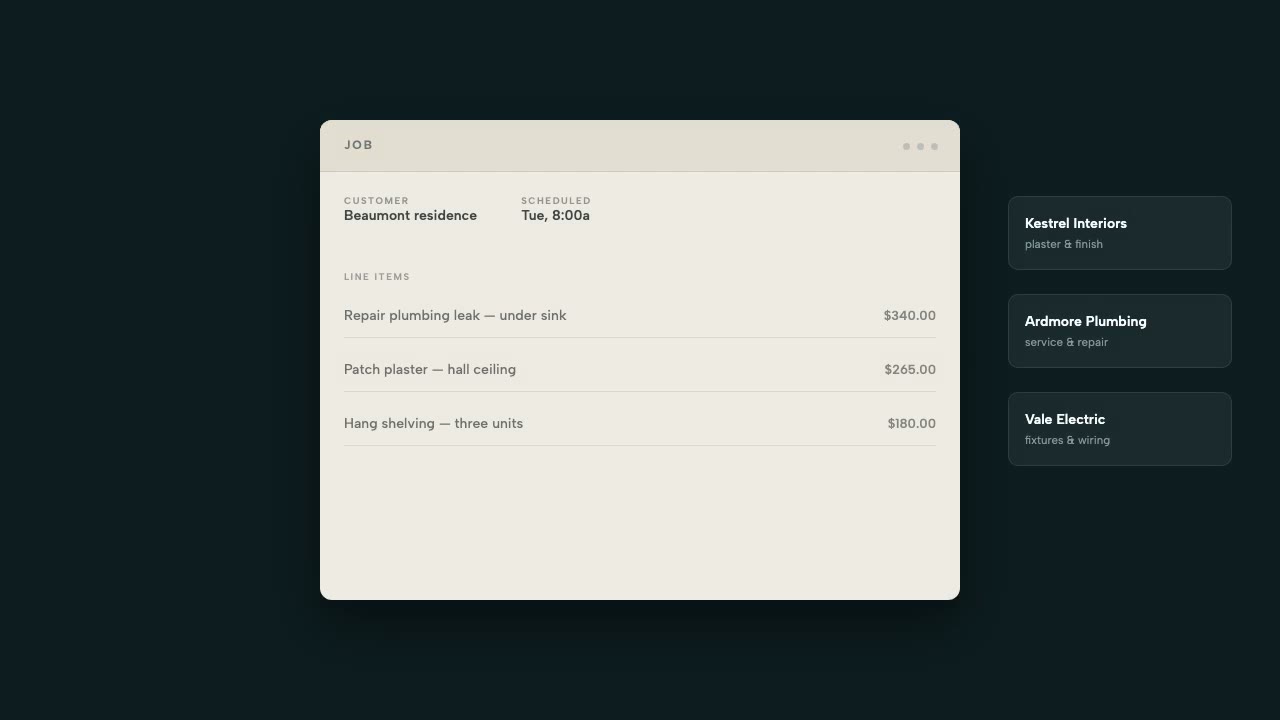
The order writes itself
Jobs arrive on their own. Tick the lines going to a sub and the purchase order is already written.
 1:25
1:25
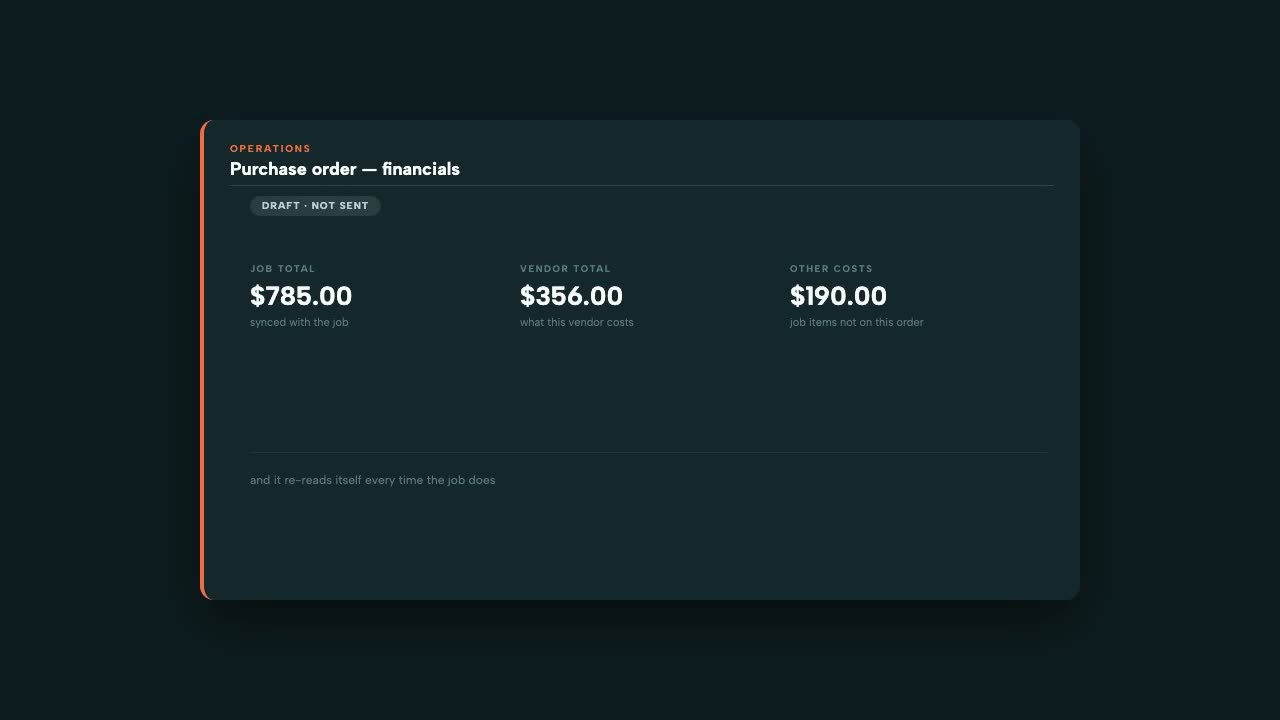
Margin before you send
What a job keeps used to be a month-end question. Now it sits on the order while it is still a draft.
 1:23
1:23
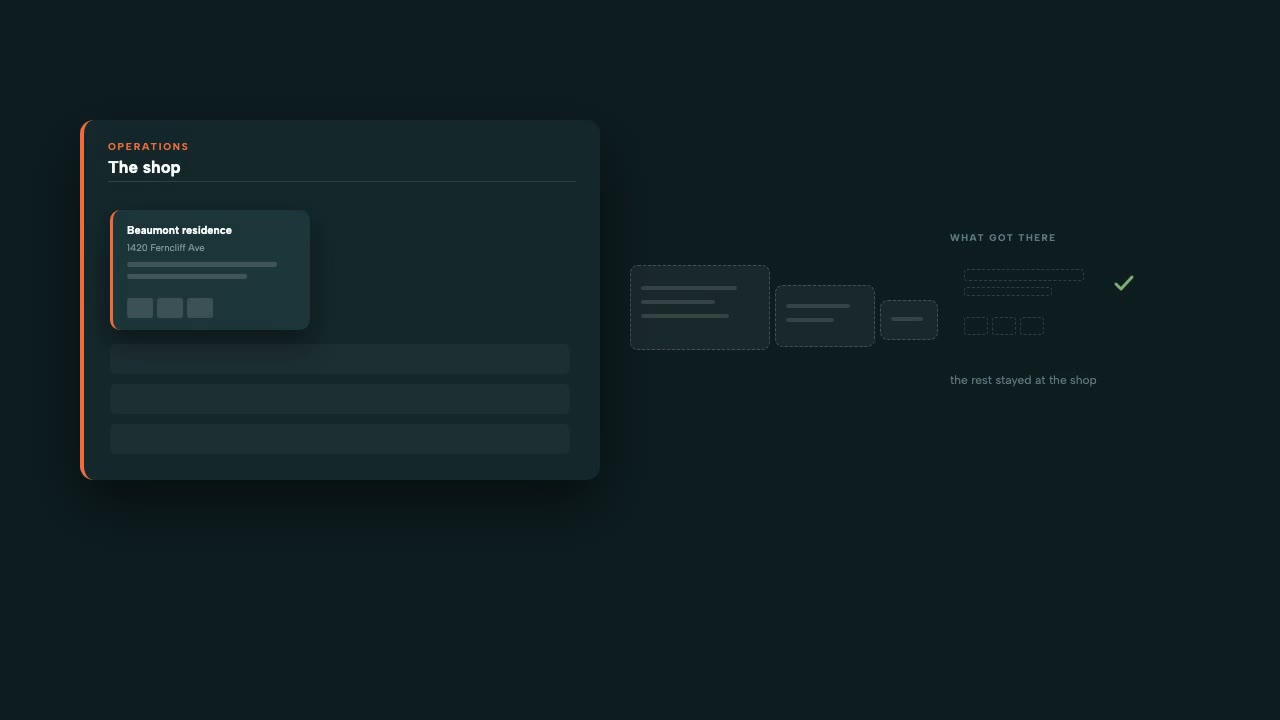
What the sub gets
The crew used to get an account of the job. Now they get the job — address, photos, line items, their number.
Service providers
A fleet maintenance platform, rebuilt from scratch.
A company running preventative maintenance schedules in spreadsheets hired a team to build them a tool. Months of work and a significant investment later, it did not meet their needs. We were referred in, rebuilt it, and as new features took shape they went all in.
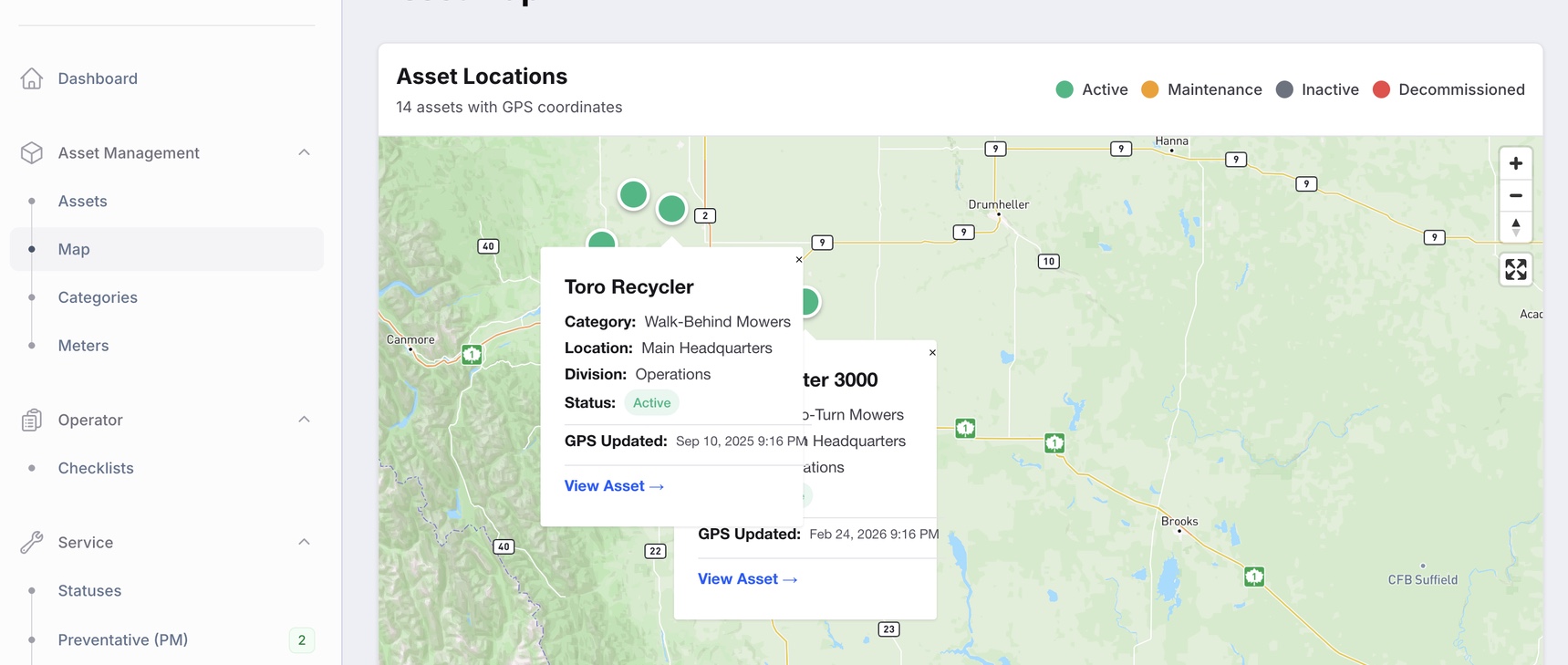
Every asset, and where it is
Serial number, ownership, service history, meter readings and photos — plotted on a live map, colour-coded by status.
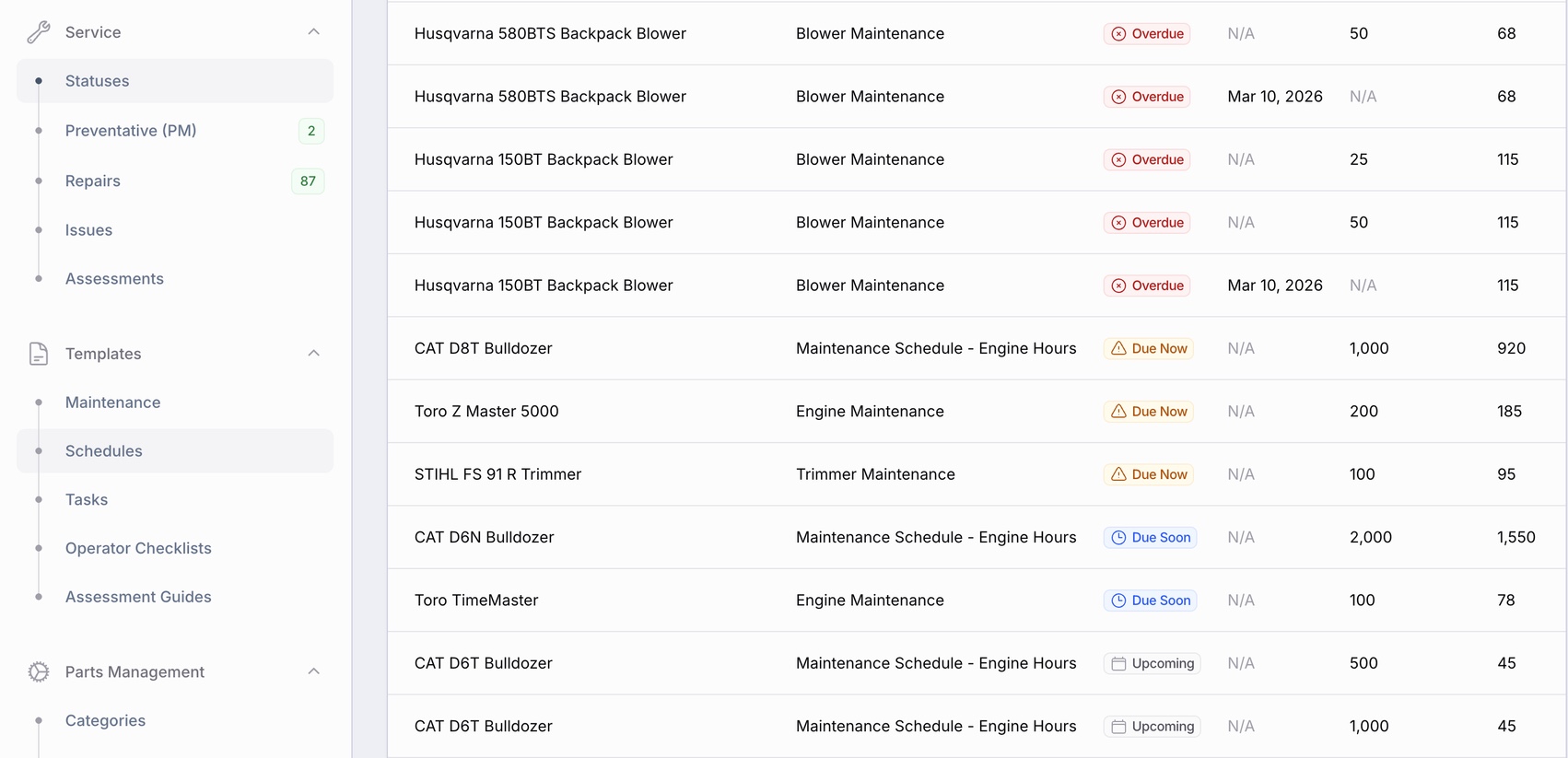
Maintenance that happens on schedule
Service intervals configured once, then tracked by time, by meter reading, or both — with what is overdue always visible.
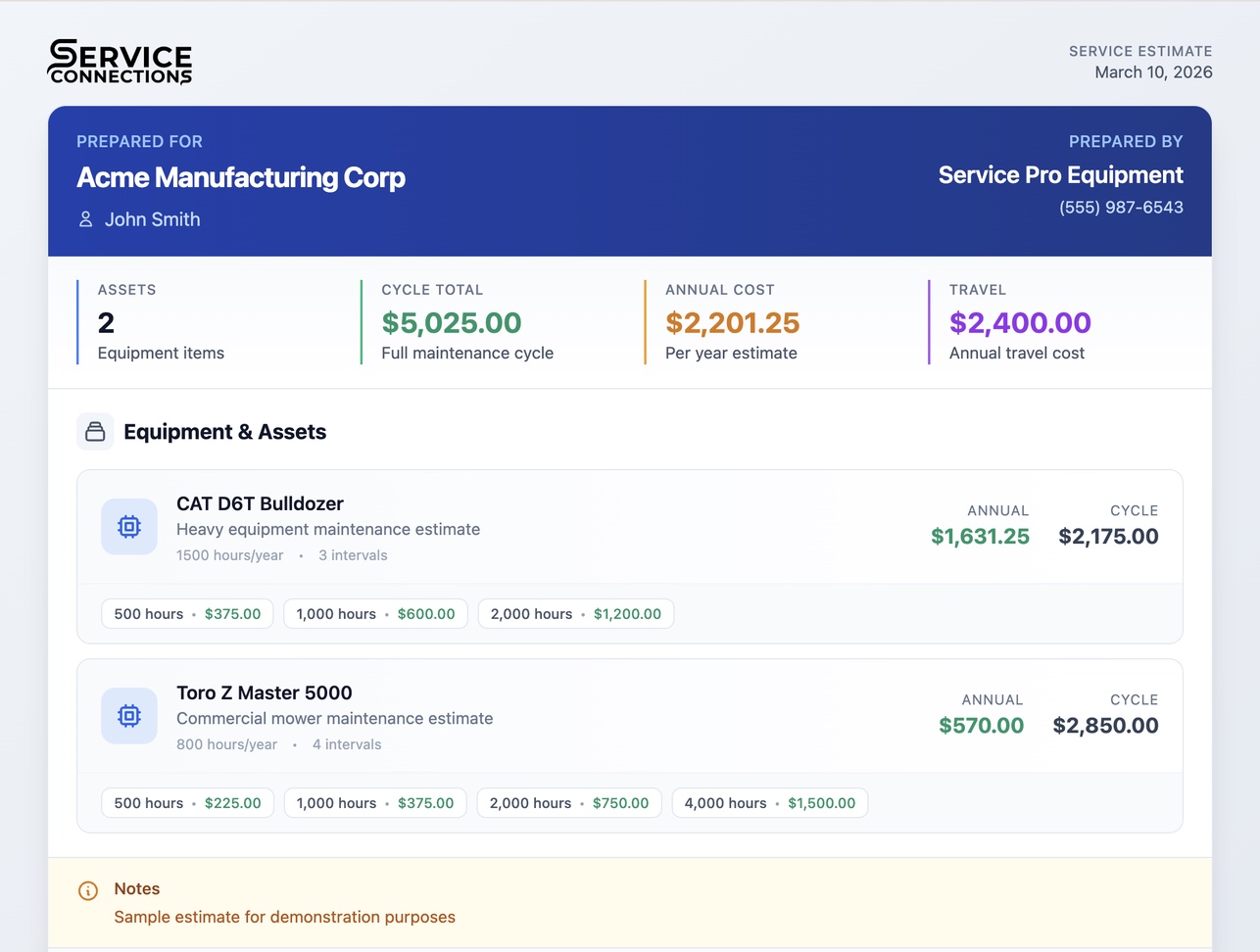
Diagnose, quote, close out
A three-stage workflow from structured equipment diagnosis to customer estimate to final documentation.